


Tel: +86-373-5128330
Fax: +86-373-5128330
WhatsApp:+86 15090482416
WeChat:15090482416
Email:info@cnshfilter.com
Email: 897505662@qq.com
Add: 800 meters west of the intersection of Hongli Avenue and Weiyuan Road, Muye District, Xinxiang City
Professional technical team
The company has a group of design and manufacturing teams with strong technical force, high-quality management personnel, and sophisticated filter processing and testing equipment. Based on the concept of high-quality products, it has continuously introduced internationally advanced technology and experience.
Wide Product Range
The products include various oil filters, hydraulic oil filters, air compressor filters, refrigeration compressor filters, various oil filter elements, which can be interchanged with nearly one hundred international famous brand filter elements.
Company Honor
Products are widely used in petroleum, chemical, refrigeration, aviation, metallurgy, power and other industrial fields, And get high praise from customers.
Sales Network
Most of our products are exported to 26 countries/regions in South America, Southeast Asia and Africa.
Definition of Gas Turbine Filter Element
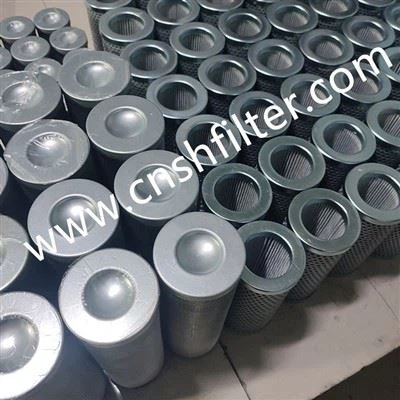
The most commonly used media for gas turbine filter element are cellulose, microfibers, and nanofibers. Cellulose media is the most economical, but has the lowest filtration efficiency. It is made of natural fibers (plant-based), which are coarse and nonuniform. The gas turbine filter element is the central component of industrial filters. The actual filtration process takes part in the filter element. The main filter variables, such as retention capacity, dirt holding capacity and pressure loss are determined by the filter elements and the filter media used in them. Gas turbines are protected by air inlet filters that remove particulate contaminants to prevent blade fouling and erosion. The most common filters used today are medium grade filters, which are insufficient to capture submicron particles that cause fouling and performance loss.




Lower overall maintenance costs
One of the biggest advantages of gas turbine filter element is that it can help lower your overall maintenance costs. Hydraulic systems are expensive to maintain, and one of the most common reasons for system failures is due to contaminated oil. By using high-quality filters, you can help extend the life of your system and avoid costly repairs down the road.

Increased efficiency
Another benefit of using gas turbine filter element is that it can help increase the efficiency of your system. Over time, contaminants can build up in your oil, causing your system to work less efficiently. This not only decreases your productivity but can also lead to increased energy costs. By using quality filters, you can help ensure that your system runs at peak efficiency, saving you money in the long run.
Enhanced safety
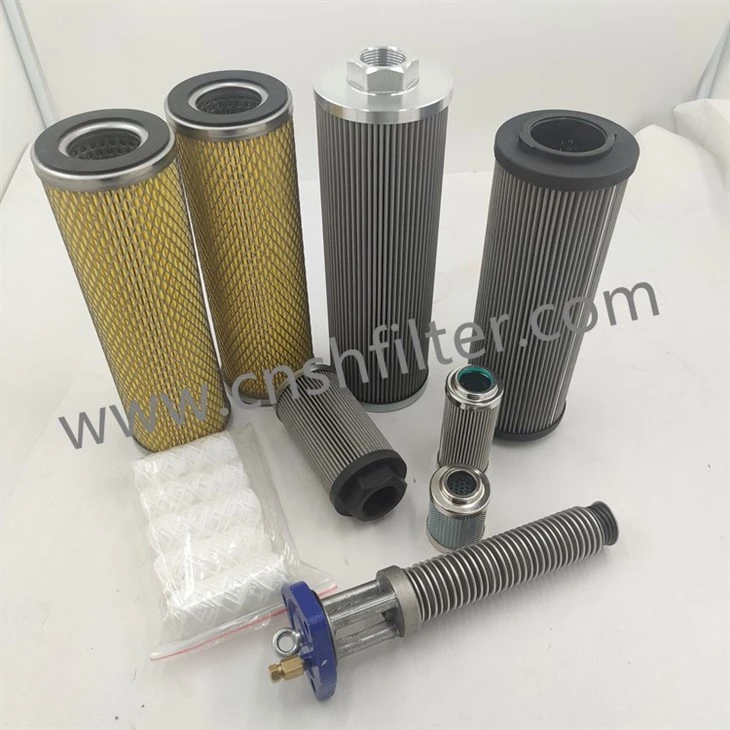
Gas turbine filter element can also enhance safety within your facility. Contaminated oil can cause serious problems if it leaks into sensitive areas or comes into contact with employees. By using high-quality filters, you can help safeguard against these potential hazards and create a safer working environment for everyone involved
In hydraulic systems containing particularly sensitive or safety-relevant components, pressure and gas turbine filter element play a crucial role. They are the heart of the hydraulic system, as they ensure optimum operation and longevity of the entire system. In such critical systems, special filter models without bypass valves are used to ensure maximum operational reliability in every conceivable operating situation.
This special pressure or high-pressure safety filters are equipped with extremely robust and gas turbine filter element elements. Even under extreme differential pressure loads, they retain their function and integrity without suffering any damage. They thus provide indispensable protection for the high-quality and often costly components of such hydraulic systems. An example of such components are valve blocks for safety-related functions.
These safety filters ensure the operational safety of the system and prevent expensive failures and repair costs. Since regular or timely maintenance of the filters is crucial for the operational reliability of the entire system, clogging indicators on safety filters are usually indispensable.
In some hydraulic systems, short-term changes in the direction of flow may occur due to the system. To ensure that filtration is reliably maintained even in such situations, gas turbine filter element can be equipped with a reversing control. In this design, several check valves in the filter housing ensure that the flow direction for the filter element remains constant.
In this way, gas turbine filter element make a significant contribution to the smooth operation, performance and longevity of hydraulic systems. They not only protect the sensitive components of the systems and extend their service life, but also help to maintain high operating performance.
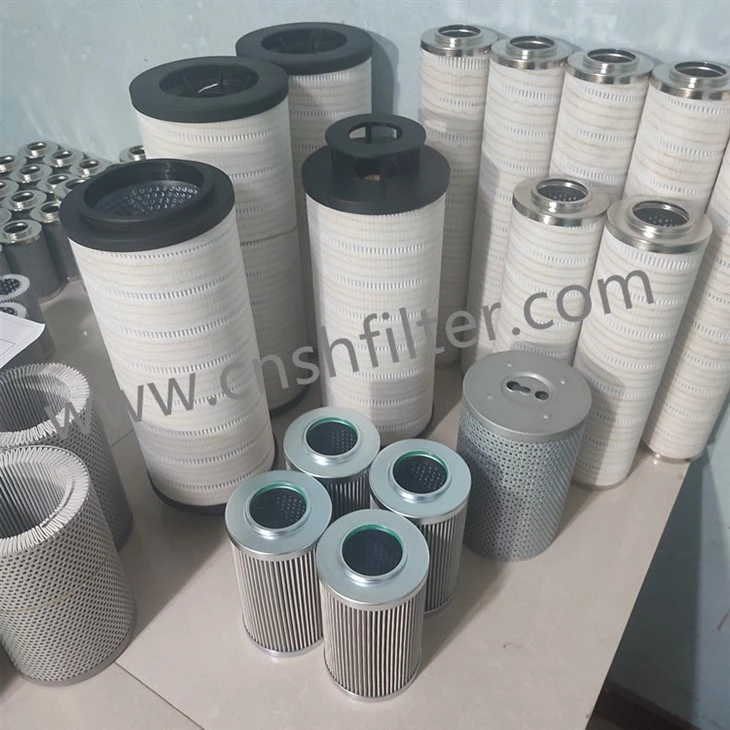
Gas turbine filter element are designed to remove contaminants from hydraulic fluid. Over time, these contaminants can build up and cause problems with the operation of the filter. Here are some common problems and solutions for gas turbine filter element:
Contaminants bypassing the filter element
This can happen if the filter element is damaged or not properly seated in the housing. Inspect the filter element and replace it if necessary. Make sure the replacement element is properly seated in the housing.
Clogged filter elements
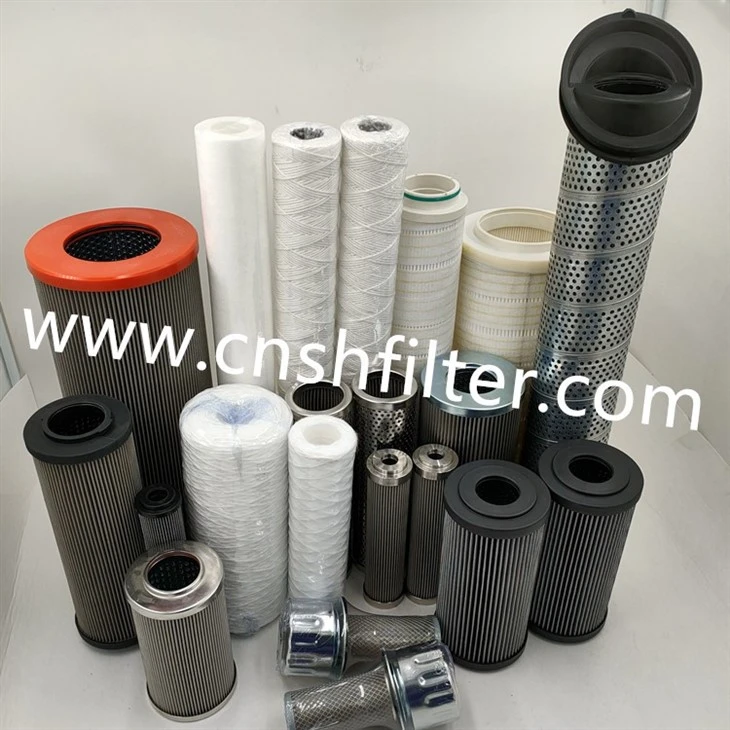
This can happen if the filter isn't changed often enough or if there is a high concentration of contaminants in the hydraulic fluid. Change the filter element according to the manufacturer's recommendations. If you have a high concentration of contaminants, consider installing a pre-filter to extend the life of your filter elements.
Damaged o-rings
This can happen if the o-rings are old or damaged, or if they aren't compatible with the hydraulic fluid being used. Inspect the o-rings and replace them as necessary. Make sure you use o-rings that are compatible with your hydraulic fluid.


Loose mounting hardware
This can happen if the bolts or other mounting hardware become loose over time. Inspect all mounting hardware and tighten as necessary.
The Considerations for Buying Gas Turbine Filter Element
There are many factors to consider when choosing these gas turbine filter element housings.
Durability
Durability is most important because gas turbine filter elements must endure severe pressure cycles. They are also subject to high pressure and temperature. The fluid they process is often flammable. Failure is not an option. Always select filter housings specifically made for hydraulic systems. These have pressure, temperature and materials specifications conducive to hydraulic applications. They will also offer bypass valves, pressure options, manifolds and other relevant features.
Gas turbine filter element may have some of these features but not others. As a result, there are several potential failure scenarios when using these. If a filter fails, the hydraulic system goes down. Moreover, there is a risk of contaminating the entire circuit and all components. This will likely result in extended downtime, equipment malfunctions and safety concerns.
Compact configuration
Compact designs allow the most filtration capacity in the smallest amount of space.
It is common that gas turbine filter element housings must fit in tight spaces. They are often part of an oem assembly made to fit in a decidedly small footprint. So, many are made with compact cast heads. These combine ports valves, circuits and manifolds in a single block. An adjoining bowl holds the element and completes the assembly. This head/cap and bowl design is very compact and easy to operate.
In contrast, multi-component systems have loose housings, valves and piping manifolds bolted together. They are often skid-mounted, much larger and complex to operate.
Ease of operation
Filter operation generally consists of positioning valves, venting, draining and changing filter elements. All these tasks should be simple and doable in a few minutes. Gas turbine filter elements are often configured as duplex assemblies. This means there are two filter chambers (bowls). One is operating while the other is on standby. An integrated "switching" valve allows operators to select which filter is in service by simply turning the valve handle 90-180 degrees. This design allows filter changes while the hydraulic system is online.
Gas turbine filter elements typically have one filter element per chamber. The element should be simple to access. Again, a cap and bowl filter housing is a good choice. The bowl threads into the cap assembly or it's adjoined with a simple clamp. A "bowl-service" filter is one where the filter element is changed by removing the bowl from the head/cap. Conversely, a "cap-service" filter is one where the cap is removed from the bowl. These are the simplest gas turbine filter element housings to operate.
Manufacturer selection
Working with industry leading manufacturers offers support and security. This cannot be overstated. Gas turbine filter elements need specialized materials and construction. A good product demands years of product development and must pass challenging tests. The quality and reliability of gas turbine filter elements get advanced by those who invest in expertise and research. This offers end-users valuable filters and expertise specific to hydraulic applications.
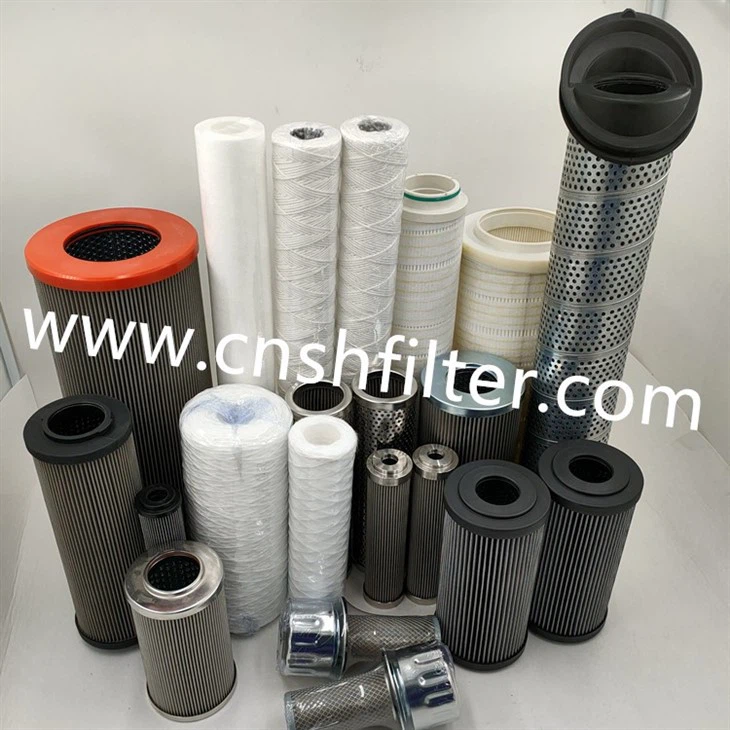
As the filter starts to work solids are removed by the microfibres and the porous structure of the gas turbine filter element is slowly filled. This will increase the pressure drop across the gas turbine filter element. The disposable filter elements are designed to have an initial pressure drop of 0.1 bar when used on gas applications.
Our disposable bonded microfibre gas turbine filter elements are depth filters so the capacity of solids is very large and they have a void volume of +90% and the service life is far greater than a typical surface filter.
As the solids build in the gas turbine filter element the pressure drop will very slowly increase as more solid particles are captured.
It is recommended that a disposable gas turbine filter element is changed before the pressure drop reaches 0.3 to 0.5 bar level and most definitely before it reaches 0.7 bar.
The thermal power plant uses the heat energy obtained by burning fuel to make the boiler produce high temperature and high pressure steam to impulse the rotation of the steam turbine to drive the generator to generate electricity. The water treatment of the power plant is mainly the water treatment of the boiler feed water. Boiler feed water is mainly divided into condensate water, boiler feed water, production return water, circulating cooling water and stator cooling water. The gas turbine filter element is mainly used in condensate treatment and boiler feed water treatment.
Condensate treatment
The impurities in condensate water mainly include corrosion products, dissolved salts, suspended matter, organic matter and dissolved gases. These impurities mainly come from the leakage of condenser cooling water and gas, and the corrosion of the thermal system, which will corrode boilers and thermal systems, so these impurities must be removed. Nowadays, the filtration system composed of pre-filtration and mixed bed is commonly used, and the most commonly used pre-filtration are string wound cartridges and pleated gas turbine filter elements with 60 or 70 inches length and 5 micron rating.
Boiler feed water treatment
The raw water for boiler feed water treatment can be river water, sea water or deep well water, etc., and then select the appropriate filtration scheme according to the specific raw water quality. Boiler feed water generally requires the removal of suspended solids, colloids, calcium, magnesium ions and other dissolved salt impurities in the water. The commonly used filtration processes of gas turbine filter element include coagulation, precipitation, reverse osmosis pretreatment, reverse osmosis filtration, ion exchange, terminal filtration, etc.
In the context of water or air purification systems, a "filter" and an "element" are related components, but they serve different purposes:
Filter
A filter is the entire unit or device that removes contaminants from a fluid (such as water or air). It includes all the components needed for the filtration process. Filters can consist of multiple parts, including a housing or casing, the filtration medium (made of materials like activated carbon, ceramic, or synthetic membranes), and inlet and outlet connections. Filters are designed to capture and remove impurities, particles, chemicals, or microorganisms from the fluid passing through them.
Gas turbine filter element
On the other hand, a gas turbine filter element is a specific part or component within the filter that performs the actual filtration. It's the core component responsible for trapping and removing contaminants. Gas turbine filter elements can come in various forms, depending on the filtration type. For example, in a cartridge-style filter, the gas turbine filter element is the replaceable part that captures impurities. In a reverse osmosis system, gas turbine filter element is the semipermeable membrane responsible for separating water from dissolved solids. Depending on the filter type and usage, gas turbine filter elements may need to be periodically replaced as they become saturated or clogged with contaminants.
Xinxiang Shunhe Filter Equipment Co., Ltd. is a comprehensive enterprise specializing in industrial filters, integrating scientific research, manufacturing and sales. The company has a group of design and manufacturing teams with strong technical force, high-quality management personnel, and sophisticated filter processing and testing equipment. The products include various oil filters, hydraulic oil filters, air compressor filters, refrigeration compressor filters, various oil filter elements, which can be interchanged with nearly one hundred international famous brand filter elements. The company has long been committed to the localization of imported equipment filters. Based on the concept of high-quality products, it has continuously introduced internationally advanced technology and experience. Products are widely used in petroleum, chemical, refrigeration, aviation, metallurgy, power and other industrial fields , And get high praise from customers.
As one of the most professional power plant filter element suppliers in China, we're featured by customized products and good service. Please rest assured to buy high quality power plant filter element for sale here from our factory. Contact us for quotation.
Replacement For Oil Filter DFLQG 0041B T1 6L1000E1W80S1, BCB Filter Element 21FV1310 500 51 25, Turbine Lubricating Oil Filter LYZ 5(0/10)

