


Tel: +86-373-5128330
Fax: +86-373-5128330
WhatsApp:+86 15090482416
WeChat:15090482416
Email:info@cnshfilter.com
Email: 897505662@qq.com
Add: 800 meters west of the intersection of Hongli Avenue and Weiyuan Road, Muye District, Xinxiang City
Professional technical team
The company has a group of design and manufacturing teams with strong technical force, high-quality management personnel, and sophisticated filter processing and testing equipment. Based on the concept of high-quality products, it has continuously introduced internationally advanced technology and experience.
Wide Product Range
The products include various oil filters, hydraulic oil filters, air compressor filters, refrigeration compressor filters, various oil filter elements, which can be interchanged with nearly one hundred international famous brand filter elements.
Company Honor
Products are widely used in petroleum, chemical, refrigeration, aviation, metallurgy, power and other industrial fields, And get high praise from customers.
Sales Network
Most of our products are exported to 26 countries/regions in South America, Southeast Asia and Africa.
Definition of Hydraulic Filter Elements
The hydraulic filter element is used in the hydraulic system to filter out the particles and rubber impurities in the system and ensure the cleanliness of the hydraulic system. Hydraulic filter elements are an essential part of any hydraulic system. Their job is to ensure that the system is well-protected from dirt and other contaminants that can damage it.

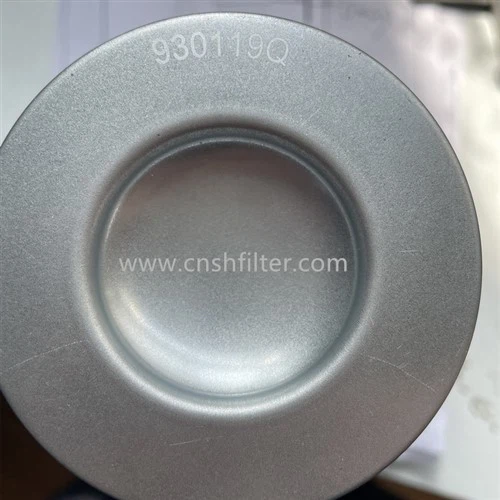


Hydraulic filter elements are used in a variety of hydraulic applications to remove contaminants from oil. There are many benefits to using hydraulic filter elements, including:
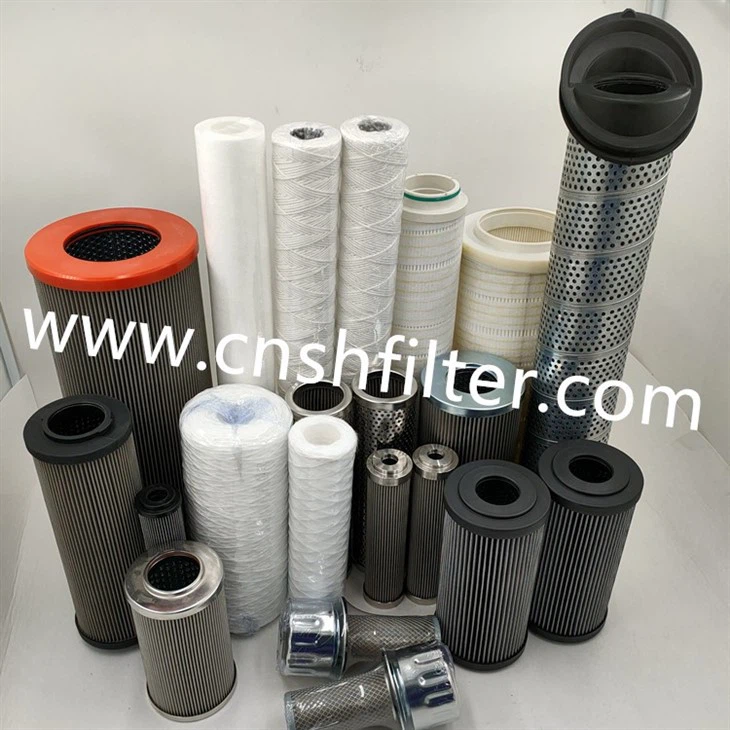
Improved system performance
By removing contaminants, high pressure hydraulic filter elements help maintain the efficiency and performance of hydraulic systems.
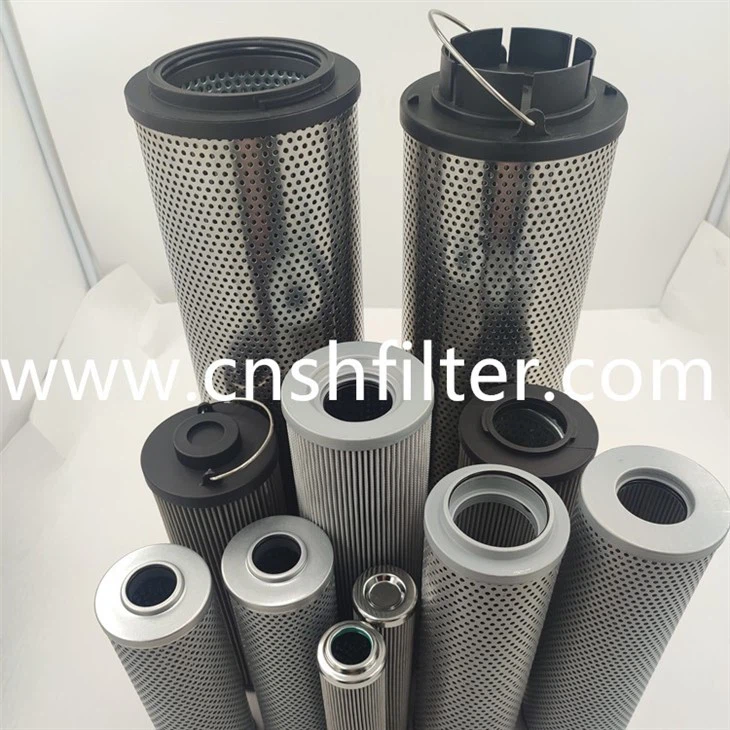
Extended component life
Clean hydraulic fluid reduces wear and tear on system components, extending their lifespan.

Reduced downtime
Proper filtration minimizes the risk of system failures, leading to reduced downtime and increased productivity.
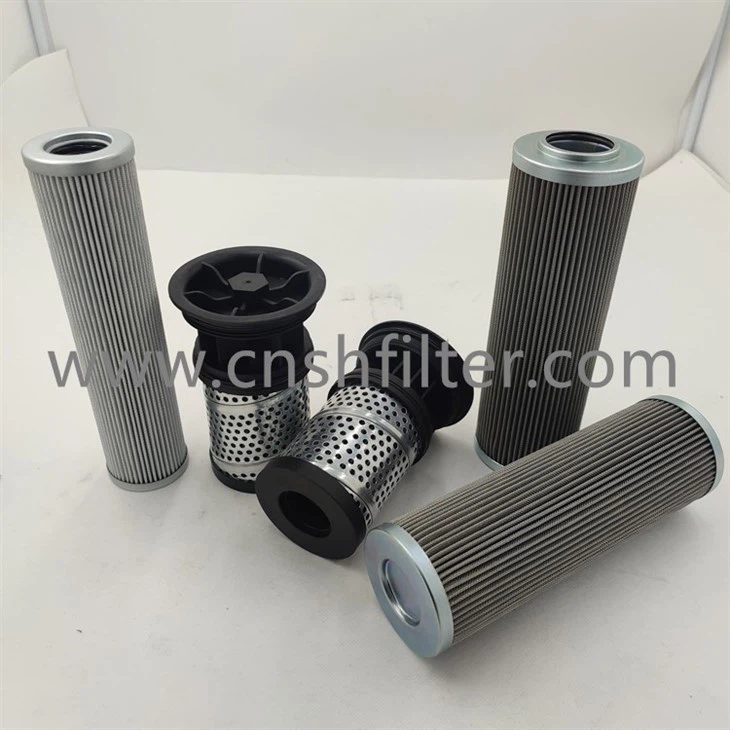
Cost savings
Regularly replacing hydraulic filter elements is more cost-effective than repairing or replacing damaged system components.
Hydraulic filter elements are used in hydraulic systems to remove contaminants from the fluid. There are a variety of different types of filter elements available, each with its own advantages and disadvantages. The type of filter element you choose will depend on the specific needs of your hydraulic filter system.
The most common type of hydraulic filter element is the pleated paper filter. Pleated paper filters are made from a variety of materials, including cellulose, glass fiber, and synthetic fibers. They are typically used in applications where high levels of contamination are expected. Pleated paper filters can be used in both oil-based and water-based hydraulic fluids.
Another common type of hydraulic filter element is the spin-on filter. Spin-on filters consist of a cylindrical housing that contains a pleated paper or synthetic fiber element. They are designed for use in applications where space is limited and easy maintenance is required. Spin-on filters can be used in both oil-based and water-based hydraulic fluids.
Cartridge-type filter elements are also available for use in hydraulic systems. Cartridge-type filters consist of a housing that contains one or more pleated paper or synthetic fiber elements. They offer high levels of contaminant removal and long service life
Hydraulic filter elements divide into two main categories: Surface and depth. Surface filters typically have a wire mesh construction like, for example, a suction strainer. Depth filters are constructed from a matrix of fibres. Cellulose (paper), plastic, glass and metal can all be used to construct a depth filter.
Man-made glass fibers are smaller and more uniform than naturally occurring cellulose fibers. When glass fibers are woven into a layer, the result is a more consistent pore structure which captures and retains dirt better (high filtration efficiency). Plus glass's smaller fiber diameter means there's more of them in a given volume and therefore more spaces to catch and retain dirt. Size for size, this gives glass filter media more dirt holding capacity than cellulose. Glass-fiber elements have the added benefit of superior fluid compatibility. They're suitable for use with mineral, synthetic and water based fluids.
The superior performance of glass elements does come at cost in terms of the element's flow resistance and therefore the pressure drop across it. As you'd expect, filter efficiency and pressure drop go together, hand-in-glove. Cellulose elements are low efficiency; low pressure drop. Glass elements are high efficiency; high pressure drop-all other things equal.
And as is often the case, with higher performance comes higher price. Cellulose elements are cheap to buy; glass are not. But this is not the whole story. Because it's not the absolute price of the element that matters. It's the dollars per gram or ounce of dirt captured and retained that matters. With this in mind, glass hydraulic filter elements can last three to five times longer than equivalent cellulose elements. Which means if you're ever doing a detailed cost comparison, don't forget to include the cost of carrying out the element changes. If a glass hydraulic filter element lasts three times as long, you save two filter changes. If it lasts five times as long, you save four filter changes.
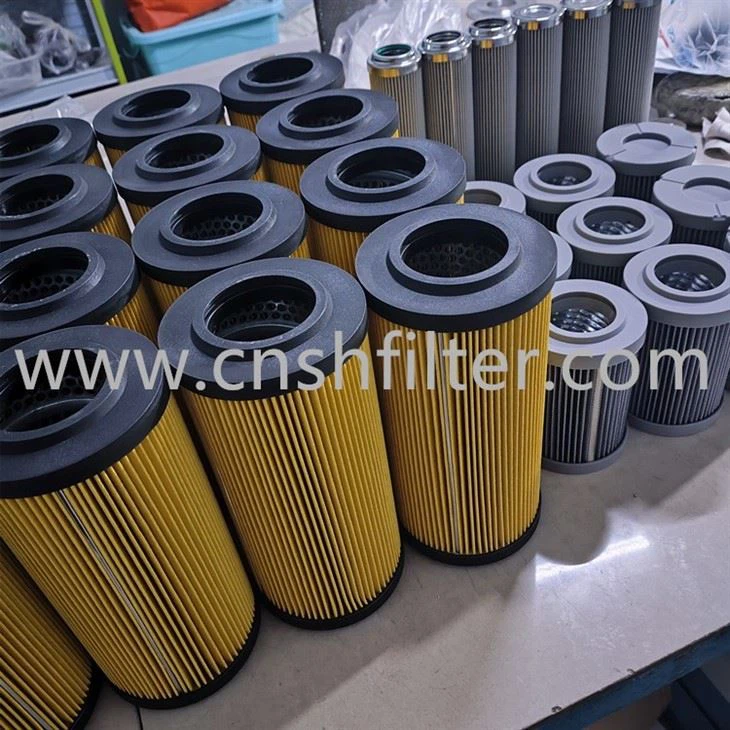
The hydraulic filter element can be used for filtering hydraulic oil, water glycol, diesel oil, processing fluid, lubricating oil, coolant, gasoline, process fluid, turbine and compressor lubricating oil, synthetic lubricating oil and more chemicals. And oil and more chemicals.
It is divided into a high-pressure section, medium-pressure section, oil return section, and oil absorption section.
Divided into high, middle, and low precision grades. 2–5um is high precision, 10–15um is medium precision, and 15–25um is low precision.
In order to compress the overall dimensions of the finished filter element and increase the filtering area, the filter layer is generally folded into a corrugated shape, and the pleating height of the hydraulic filter element is generally below 20mm.
Generally, the pressure difference of hydraulic filter elements is 0.35–0.4MPa, but some special filter elements are required to bear high-pressure differences, and the maximum requirement is 32MPa, even 42MPa, which is equivalent to the system pressure.
The highest temperature, some requirements of 135℃.
Hydraulic filter elements are mainly used in varieties of hydraulic system in the industry. These filters have many advantages that ensures safe working of hydraulic system. Some of those function of hydraulic filter elements are listed below:
● Remove contaminants in hydraulic systems which is responsible for 80% of systems failure.
● Reduce the cost of running hydraulic systems by preventing system downtime and frequent wear of components due to contaminatio.
● Protect hydraulic systems components such as fittings, hoses, valves, pumps, etc. From contaminants that would otherwise cause damage.
● Reduces frequency of systems maintenance and component replacement.
● Ensures hydraulic system is safe and clean.

If a hydraulic filter element is removable, then it's most likely to be cleanable. In this post we look at how to clean a hydraulic filter elements in the most effective manner. The result should be that you can perform more of your own maintenance and therefore can save on cost of parts and of expertise.
To remove the filter from the filter canister, it's important to follow the instructions of the manufacturer. Once the filter has been removed, it can then be cleaned, placed back into its position and re-used. Industrial environments are quite often dusty and dirty, and although hydraulic systems are usually closed, you will still need to factor the cleaning task into your regular engineer maintenance schedule to ensure the best performance from your system.
You will need the following pieces of equipment in order to clean your hydraulic filter elements:
● A gallon of hydraulic fluid
● A solvent tank cleaning system
● A small brush
● A small bucket
● A pair of rubber gloves
Start the cleaning process by placing the hydraulic filter elements into the solvent tank. Use the solvent to clean the filter and then rinse it off as you use the small brush to remove any debris and dirt. The solvent will work on dissolving the dirt, so be generous with your application of it. Once the cleaning is finished, you can then shake off the excess solvent from the filter.
Now pour the hydraulic fluid into the bucket and place the filter into it. Now swish the filter in the fluid for a few minutes. This will help to remove any traces of solvent. You can now reinsert the filter into its position. Keeping your oil filter clean will help to keep the entire hydraulic system cleaner. It's something that is worth the investment in both trouble and cost.
When selecting hydraulic filter element it's best to determine the most sensitive component in the system, and then select the filtration cleanliness level for that component. When selecting high pressure hydraulic filter elements, it is essential to consider the following factors:
Pressure rating: Ensure that the hydraulic filter element can withstand the maximum operating pressure of your hydraulic system.
Efficiency rating: Look for hydraulic filter elements with high filtration efficiency to remove even the smallest particles from the hydraulic fluid.
Flow rate: Consider the flow rate requirements of your hydraulic system to choose a hydraulic filter element that can handle the desired flow.
Dirt-holding capacity: A higher dirt-holding capacity means the hydraulic filter element can trap more contaminants before requiring replacement.
Visual inspection indication
Visual inspection can help assess the condition of the hydraulic filter elements. When a filter is subject to harsh conditions, degradation of the media or other visual defects can occur. Unless there is significant visible damage, this method is highly subjective and provides very little consistency across maintenance personnel.
Time-based indication
A simple approach to changing a filter is to follow a specified maintenance interval based on experience with the process and the equipment. For example, if the equipment oil must be changed every 2000, 4000, or 8000 hours, schedule the replacement filter change at the same time. This method assumes that the filter is not clogging and degrading equipment performance during the specified time frame
Differential pressure indication
Pressure differential is widely used as a forward indicator that it is time to change hydraulic filter elements. This is probably the best and most accurate method of assessing the remaining life of hydraulic filter elements assuming there are no tears or holes in the filter media. As a filter becomes loaded or saturated with contaminant, the restriction of air flow will increase. As a result, the pressure drop across the filter will also increase. By measuring the clean pressure drop across a filter at installation, you can closely monitor the differential pressure. Simple gauges or pressure drop indicators (pdi) can be used in combination with a filter so that a change out point can be determined.
Declining equipment performance indication
Filtration by its nature will place a restriction on the air flow to your machinery. A well-sized filter will minimize this restriction at start up. As the hydraulic filter elements becomes dirty and begins to clog with contaminants, the air-moving equipment must work harder to overcome the increased restriction of air flow caused by the clogged media. If a filter is not changed or maintained, the required system performance may become more difficult to achieve, and the process may need to shut down. The result can be additional energy usage, as your equipment works harder to counteract the restriction. A well-sized and maintained filter will not just protect the equipment, but also contribute to reduced energy usage.
Contaminated process indication
If your process outputs are contaminated, this may be another indication that it is time to change your filter. Scrapping finished or in process goods can be costly. If an inlet filter to a blower has failed in a plastics pneumatic conveying application, atmospheric dust and debris can end up in the plastic being conveyed. Think of injection molding or thin film applications: Any atmospheric dust particles could ruin the batch.
Contaminated environment indication
In oil mist eliminators, when a coalescing element clogs, it can start to bypass oil mist and start "smoking". Many factors contribute to clogging, including particulate getting into the discharge air stream, or emulsification of lubricating oil reaching the exhaust filter. In either case, bypass of oil mist can be an indication that it is time to change the coalescing hydraulic filter elements.
System failure indication
If hydraulic filter elements is neglected and reaches its maximum pressure differential rating, it could collapse. A collapsed filter will allow bypass and the equipment could ingest harmful contaminants which damage the internals. This is the ultimate indicator that it is time for a replacement hydraulic filter elements…and maybe time for a costly rebuild or new piece of equipment as well.
Xinxiang Shunhe Filter Equipment Co., Ltd. is a comprehensive enterprise specializing in industrial filters, integrating scientific research, manufacturing and sales. The company has a group of design and manufacturing teams with strong technical force, high-quality management personnel, and sophisticated filter processing and testing equipment. The products include various oil filters, hydraulic oil filters, air compressor filters, refrigeration compressor filters, various oil filter elements, which can be interchanged with nearly one hundred international famous brand filter elements. The company has long been committed to the localization of imported equipment filters. Based on the concept of high-quality products, it has continuously introduced internationally advanced technology and experience. Products are widely used in petroleum, chemical, refrigeration, aviation, metallurgy, power and other industrial fields , And get high praise from customers.
As one of the most professional hydraulic filter elements suppliers in China, we're featured by customized products and good service. Please rest assured to buy high quality hydraulic filter elements for sale here from our factory. Contact us for quotation.
Replacement Filter for Parker, Replacement Filters for Vickers, Replacement For HYDAC Filters(0/10)

