


Tel: +86-373-5128330
Fax: +86-373-5128330
WhatsApp:+86 15090482416
WeChat:15090482416
Email:info@cnshfilter.com
Email: 897505662@qq.com
Add: 800 meters west of the intersection of Hongli Avenue and Weiyuan Road, Muye District, Xinxiang City
Professional technical team
The company has a group of design and manufacturing teams with strong technical force, high-quality management personnel, and sophisticated filter processing and testing equipment. Based on the concept of high-quality products, it has continuously introduced internationally advanced technology and experience.
Wide Product Range
The products include various oil filters, hydraulic oil filters, air compressor filters, refrigeration compressor filters, various oil filter elements, which can be interchanged with nearly one hundred international famous brand filter elements.
Company Honor
Products are widely used in petroleum, chemical, refrigeration, aviation, metallurgy, power and other industrial fields, And get high praise from customers.
Sales Network
Most of our products are exported to 26 countries/regions in South America, Southeast Asia and Africa.
Definition of Cement Plant Filter Element
Cement plant filter elements are commonly used in cement plants to capture and remove particulate matter and dust from the exhaust gases generated during the production process. The cement plant filter element consists of fabric bags that capture the particulate matter, allowing clean air to pass through. The bags are periodically cleaned using a reverse air flow system to remove accumulated dust, ensuring efficient and continuous operation. Cement plant filter elements enable efficient filtration and minimal downtime as they have two filter housings that can be used alternately. This design ensures continuous operation of the system even during maintenance or replacement of filter elements. Cement plant filter elements are used in applications where continuous liquid filtration is essential and continuous operation is critical.


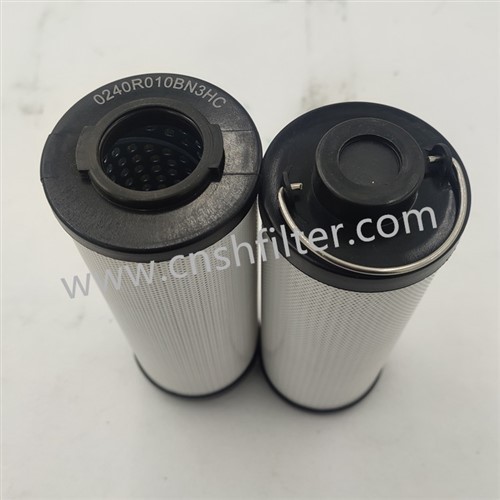


Efficient filtration for uninterrupted operations
Cement plant filter element feature a dual-chamber design that enables continuous filtration without interrupting the flow of the process fluid. The strainers are equipped with two separate baskets or screens that can be operated independently, allowing one basket to be cleaned or replaced while the other remains in service. This configuration ensures a consistent flow of filtered fluid and eliminates the need for system shutdowns during maintenance, resulting in uninterrupted operations and increased productivity.
Reliable contaminant removal
Cement plant filter element are engineered to effectively remove a wide range of contaminants, including debris, sediment, scale, rust, and other solid particles that can jeopardize system performance. The robust construction and precise manufacturing of the strainers guarantee reliable removal of contaminants, protecting sensitive equipment downstream, such as pumps, valves, heat exchangers, and nozzles. By preventing clogging and damage caused by foreign materials, these strainers contribute to enhanced system reliability and longevity.
Versatility and customization
The strainers are available in different materials, such as stainless steel, carbon steel, and exotic alloys, ensuring compatibility with a wide range of fluids, pressures, and temperatures. Additionally, customization options such as basket perforation sizes, mesh types, and connection sizes are available to tailor the strainers precisely to the application's needs.
Quality manufacturing and compliance
The company employs state-of-the-art manufacturing processes and adheres to rigorous quality control measures to ensure the reliability, durability, and performance of their products. Cement plant filter element comply with international codes and standards, including asme, api, and ansi, providing customers with the assurance of superior quality and compliance.

As the filter starts to work solids are removed by the microfibres and the porous structure of the cement plant filter element is slowly filled. This will increase the pressure drop across the cement plant filter element. The disposable filter elements are designed to have an initial pressure drop of 0.1 bar when used on gas applications.
Our disposable bonded microfibre cement plant filter elements are depth filters so the capacity of solids is very large and they have a void volume of +90% and the service life is far greater than a typical surface filter.
As the solids build in the cement plant filter element the pressure drop will very slowly increase as more solid particles are captured.
It is recommended that a disposable cement plant filter element is changed before the pressure drop reaches 0.3 to 0.5 bar level and most definitely before it reaches 0.7 bar.
In the context of water or air purification systems, a "filter" and an "element" are related components, but they serve different purposes:
Filter
A filter is the entire unit or device that removes contaminants from a fluid (such as water or air). It includes all the components needed for the filtration process. Filters can consist of multiple parts, including a housing or casing, the filtration medium (made of materials like activated carbon, ceramic, or synthetic membranes), and inlet and outlet connections. Filters are designed to capture and remove impurities, particles, chemicals, or microorganisms from the fluid passing through them.
Cement plant filter element
On the other hand, a cement plant filter element is a specific part or component within the filter that performs the actual filtration. It's the core component responsible for trapping and removing contaminants. Cement plant filter elements can come in various forms, depending on the filtration type. For example, in a cartridge-style filter, the cement plant filter element is the replaceable part that captures impurities. In a reverse osmosis system, cement plant filter element is the semipermeable membrane responsible for separating water from dissolved solids. Depending on the filter type and usage, cement plant filter elements may need to be periodically replaced as they become saturated or clogged with contaminants.
Filtration can be divided into constant pressure filtration and constant speed filtration. Constant pressure filtration refers to filtration under a constant pressure difference. As the filtration progresses, the thickness of the filter cake gradually increases, the resistance increases and the filtration rate continues to decrease. Constant speed filtration refers to the filtration process that maintains the filtration rate unchanged. In order to maintain the filtration rate constant, the pressure difference must be continuously increased to overcome the rising resistance due to the thickening of the filter cake. Since the pressure difference is constantly changing, constant-speed filtration is difficult to control, so constant-pressure filtration is generally used in production. Sometimes, in order to avoid clogging and damage of the filter cloth due to high pressure difference in the initial stage of filtration, the operation method of first constant speed and then constant pressure can also be adopted.
Filtration rate refers to the volume of filtrate that can be obtained per unit time and unit filtration area. The greater the filtration driving force, the faster the filtration rate, the greater the filtration resistance, and the slower the filtration rate. In differential pressure filtration, the driving force is the differential pressure, and the resistance is related to many factors such as the structure and thickness of the filter cake and the nature of the filtrate. The driving force and resistance directly affect the filtration rate. The following mainly analyzes the influence of various factors on the cement plant filter element rate from three aspects.
The nature of the filter medium
The influence of filter media is mainly manifested in the resistance and efficiency of filtration. Since the concentration and particle size in different filtrates are different, if the pores of the selected filter medium are much larger than the particle size, the required filtering effect will not be achieved. If the pores of the selected filter medium are much smaller than the size of the particles, the filter medium will be blocked quickly, greatly shortening the service life. We have to select a suitable filter medium for filtration treatment according to the concentration in the filtrate and the size of the particles.
Filtered pressure difference
Generally, for incompressible filter cakes, increasing the driving force can increase the filtering rate. But for compressible filter cake, pressure can not effectively increase the filtration rate. In the filtration operation, it can be divided into pressure filtration, vacuum filtration, gravity filtration and centrifugal filtration according to the different driving force. The filtration rate can be improved by increasing pressure difference appropriately.
The nature of the suspension
The viscosity of the suspension has a greater impact on the filtration rate, the smaller the viscosity, the faster the filtration rate. The two factors that affect the viscosity the most are temperature and concentration. The higher the temperature in the liquid, the lower the viscosity, otherwise the higher the viscosity. In some areas when the liquid is filtered with low temperature, sometime the liquid needs to be heated to an appropriate temperature to ensure that the filtration rate meets the requirements. The greater the concentration in the liquid, the greater the viscosity, otherwise the lower the viscosity. If the liquid concentration is too high, we can properly dilute the liquid without affecting the properties of the liquid to make the filtration rate reach the expected standard.
Key Components of Cement Plant Filter Element Vents
Key components of cement plant vents often include dust hood, cement plant filter elements, air vents, and the dust discharge. The dust hood captures the airborne dust as material fills the silo. The cement plant filter elements, often pleated for maximum surface area, trap the dust particles from the displaced air. The air vents allow the filtered air to escape, while the dust discharge provides an outlet for collected dust, usually into a receptacle or conveyor for removal.
Dust Hood: The dust hood, or inlet, is the entry point for dust-laden air into the dust collector. It's typically positioned to capture dust at the source—where dust generation is most intense—such as the point of material discharge or transfer.
Cement plant filter elements: The filters are the heart of any dust collector. They can be bags, cartridges, or other cement plant filter elements that trap dust particles while allowing clean air to pass through. The choice of filter type and material depends on several factors, including the nature of the dust and the operating conditions.
Air Vents: These components allow the filtered air to escape the dust collector, maintaining the pressure balance within the system. In some systems, fans may be used to facilitate air movement.
Cleaning System: Dust collectors typically incorporate a cleaning mechanism to remove the dust collected on the filter surface. This could be a pulse jet, shaker, or reverse-air mechanism, depending on the dust collector type. Regular cleaning of the filters is essential to maintain their filtration efficiency and prolong their lifespan.
Dust Discharge: The dust discharge, often linked to a hopper or other collection point, provides an outlet for the collected dust. The dust can then be removed and disposed of or processed further.
Electronic Sequencing System: In many dust collectors, an electronic sequencer controls the cleaning process. It determines when and how the cleaning mechanism is activated, ensuring efficient operation and minimizing unnecessary wear on the filters.
Compressed Air System: In dust collectors that use a pulse jet cleaning mechanism, a compressed air system is essential. This system, often assisted by a reservoir or tank, delivers short, sharp blasts of air to clean the filters.
When selecting cement plant filter elements, buyers need to consider the relationship between particle sizes and levels of filtration. In addition to filtration grade, key performance specifications include maximum liquid flow and maximum pressure.
Durability
Durability is most important because cement plant filter elements must endure severe pressure cycles. They are also subject to high pressure and temperature. The fluid they process is often flammable. Failure is not an option. Always select filter housings specifically made for hydraulic systems. These have pressure, temperature and materials specifications conducive to hydraulic applications. They will also offer bypass valves, pressure options, manifolds and other relevant features. Cement plant filter element may have some of these features but not others. As a result, there are several potential failure scenarios when using these. If a filter fails, the hydraulic system goes down. Moreover, there is a risk of contaminating the entire circuit and all components. This will likely result in extended downtime, equipment malfunctions and safety concerns.
Compact configuration
Compact designs allow the most filtration capacity in the smallest amount of space.
It is common that cement plant filter element housings must fit in tight spaces. They are often part of an oem assembly made to fit in a decidedly small footprint. So, many are made with compact cast heads. These combine ports valves, circuits and manifolds in a single block. An adjoining bowl holds the element and completes the assembly. This head/cap and bowl design is very compact and easy to operate. In contrast, multi-component systems have loose housings, valves and piping manifolds bolted together. They are often skid-mounted, much larger and complex to operate.
Ease of operation
Filter operation generally consists of positioning valves, venting, draining and changing filter elements. All these tasks should be simple and doable in a few minutes. Cement plant filter elements are often configured as duplex assemblies. This means there are two filter chambers (bowls). One is operating while the other is on standby. An integrated "switching" valve allows operators to select which filter is in service by simply turning the valve handle 90-180 degrees. This design allows filter changes while the hydraulic system is online. Cement plant filter elements typically have one filter element per chamber. The element should be simple to access. Again, a cap and bowl filter housing is a good choice. The bowl threads into the cap assembly or it's adjoined with a simple clamp. A "bowl-service" filter is one where the filter element is changed by removing the bowl from the head/cap.
Conversely, a "cap-service" filter is one where the cap is removed from the bowl. These are the simplest cement plant filter element housings to operate.
Manufacturer selection
Working with industry leading manufacturers offers support and security. This cannot be overstated. Cement plant filter elements need specialized materials and construction. A good product demands years of product development and must pass challenging tests. The quality and reliability of cement plant filter elements get advanced by those who invest in expertise and research. This offers end-users valuable filters and expertise specific to hydraulic applications.
Xinxiang Shunhe Filter Equipment Co., Ltd. is a comprehensive enterprise specializing in industrial filters, integrating scientific research, manufacturing and sales. The company has a group of design and manufacturing teams with strong technical force, high-quality management personnel, and sophisticated filter processing and testing equipment. The products include various oil filters, hydraulic oil filters, air compressor filters, refrigeration compressor filters, various oil filter elements, which can be interchanged with nearly one hundred international famous brand filter elements. The company has long been committed to the localization of imported equipment filters. Based on the concept of high-quality products, it has continuously introduced internationally advanced technology and experience. Products are widely used in petroleum, chemical, refrigeration, aviation, metallurgy, power and other industrial fields , And get high praise from customers.
As one of the most professional cement plant filter element suppliers in China, we're featured by customized products and good service. Please rest assured to buy high quality cement plant filter element for sale here from our factory. Contact us for quotation.
Replacement For SICHUAN CRUN Filter Element, Replacement For South Lubrication Filter Element, Replacement For Huali Hydraulic Lubrication Filter Element(0/10)

